

Ask a Costa Rican where to find real Guanacaste cooking and the answer usually involves corn. While the Caribbean coast cooks with coconut, this northwest province built its kitchen on maize: hand-patted tortillas, corn rice simmered with chicken, ring-shaped rosquillas eaten with afternoon coffee. Add the Pacific catch that comes in along this coast, and you have the two things most worth eating during a stay in Las Catalinas.
Short answer: The best local food in Las Catalinas is Guanacaste’s corn-based cooking and fresh Pacific seafood. In town, the menus most rooted in Costa Rican flavors are at Sentido Norte and La Pampa Grill, while Ponciana, Tamaki, Pots & Bowls and Celeste cover everything from beachside lunches to Japanese-Peruvian plates. At Villa Alberti, the executive chef can cook the same regional dishes in the villa, from a ceviche lunch to a full Guanacaste dinner.
Gallo pinto, casado and chifrijo are Costa Rica’s national staples, served from the Caribbean to the Pacific. The dishes below belong more specifically to Guanacaste.
What “Local” Means in Guanacaste
Guanacaste’s cooking carries pre-Columbian and colonial roots, according to the Costa Rica Tourism Board’s guide to the region. Some cooks still use a clay comal, a flat griddle in the style of the Chorotega pottery made in villages such as Guaitil, near Santa Cruz.
Two ingredients define the table:
Corn, ground fresh, cracked for rice dishes, or turned into drinks and sweets.
Seafood, since the province runs along a long stretch of Pacific coastline. Corvina and red snapper are the fish you will see most often.
Most of the corn-based dishes below are home cooking. You are more likely to meet them at a family table, a roadside stand, or a celebration around July 25, when Guanacaste marks its 1824 annexation to Costa Rica, than on a resort menu. That is one reason a private chef is useful here.
Guanacaste Dishes Worth Seeking Out
Arroz de maíz
Despite the name, there is no rice in it. Cracked corn kernels are cooked slowly in chicken broth with the shredded chicken, garlic, onion, sweet pepper and culantro until the corn turns soft and almost creamy. It is the dish Guanacastecos tend to name first when asked about their food.
Tortillas palmeadas and tortillas revueltas
Guanacaste tortillas are thicker and larger than the tortillas most visitors know, patted out by hand and cooked on the comal. The revuelta version mixes grated Costa Rican cheese into the corn dough. Eaten warm with cuajada, a fresh curd cheese, or alongside a stew, they are the backbone of a local breakfast.
Rosquillas and tanelas
Small corn-and-cheese breads baked until crisp. The rosquilla is shaped like a ring; the tanela is often sweetened with tapa de dulce, Costa Rica’s unrefined cane sugar. They are made to go with coffee, and a bag of them is a good thing to bring back from a day trip inland.
Tamales, including tamal asado
Costa Rica eats tamales across the country, but Guanacaste’s versions have some of the oldest Mesoamerican roots. Look for tamal asado, a sweet baked corn cake, and yoles, made with tender corn, sour cream and fresh cheese.
Corn drinks: chicheme and pozol
Chicheme is a thick drink made from purple pujagua corn. Pozol is a useful lesson in local vocabulary: some Guanacaste cooks use the name for a cold purple-corn drink, while others mean a savory pork-and-corn dish. If it is on a menu, ask which one you are getting.
Cajetas
Dense, fudge-like sweets made from milk and coconut or from grated green papaya. A piece at the end of a meal is very Guanacaste.
From the Pacific
Seafood is the other half of the local table, and the side most visitors will eat every day.
Ceviche: the classic Costa Rican version uses corvina or shrimp cured in lime juice with onion and cilantro, usually served with crackers or plantain chips.
Whole fried fish: red snapper fried whole and served with rice, salad and patacones.
Arroz con mariscos: rice cooked with shrimp, squid and shellfish, a common lunch plate along the coast.
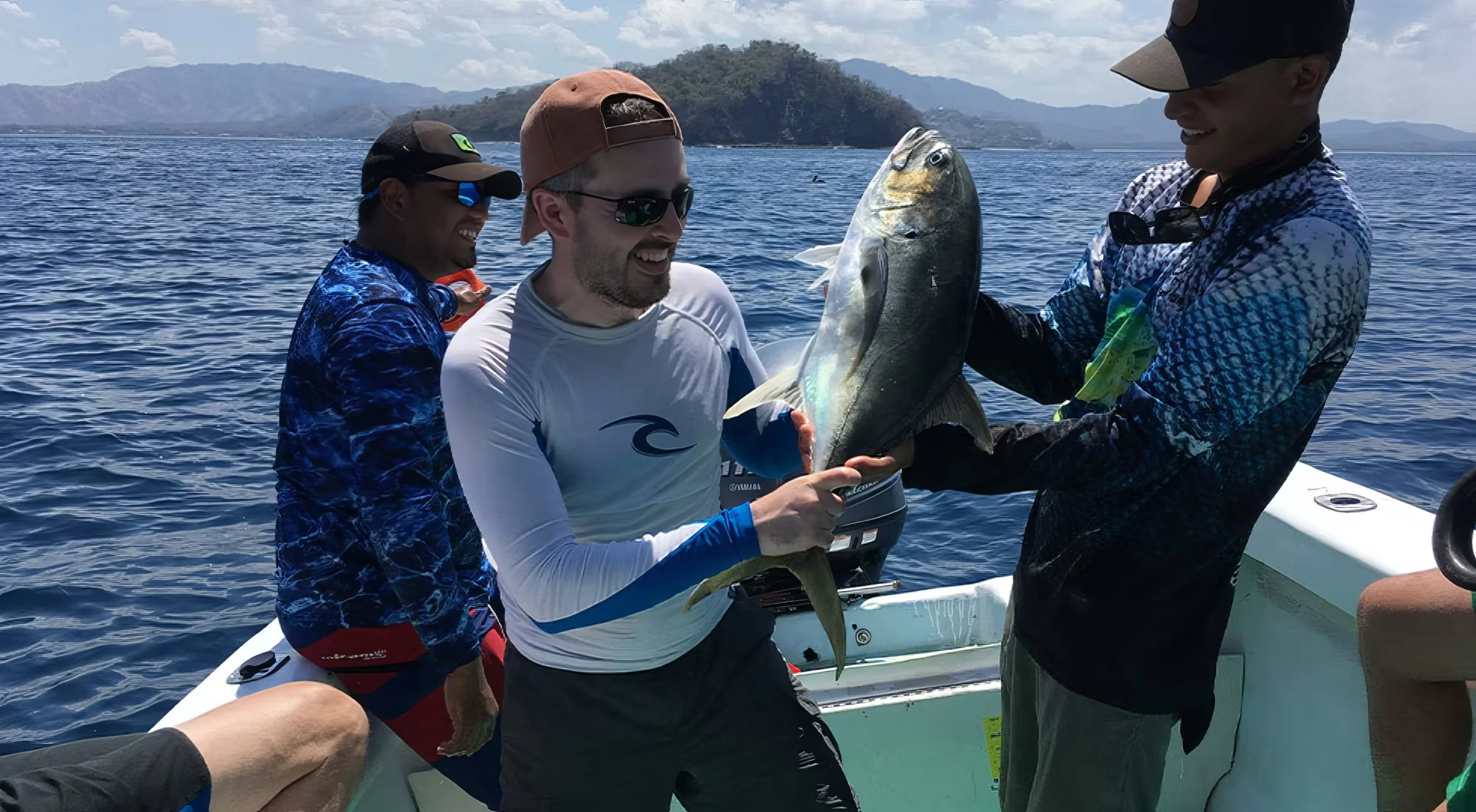
Tuna and dorado: both are targets of the sport fishing charters that leave from Marina Flamingo and Marina Papagayo, and both end up seared, raw or grilled on menus in the area.
Where to Eat in Town
Las Catalinas is small and car-free, so every restaurant in town is within walking distance of Villa Alberti. Menus change through the year, so treat this as a starting point and ask the concierge what is cooking during your dates.
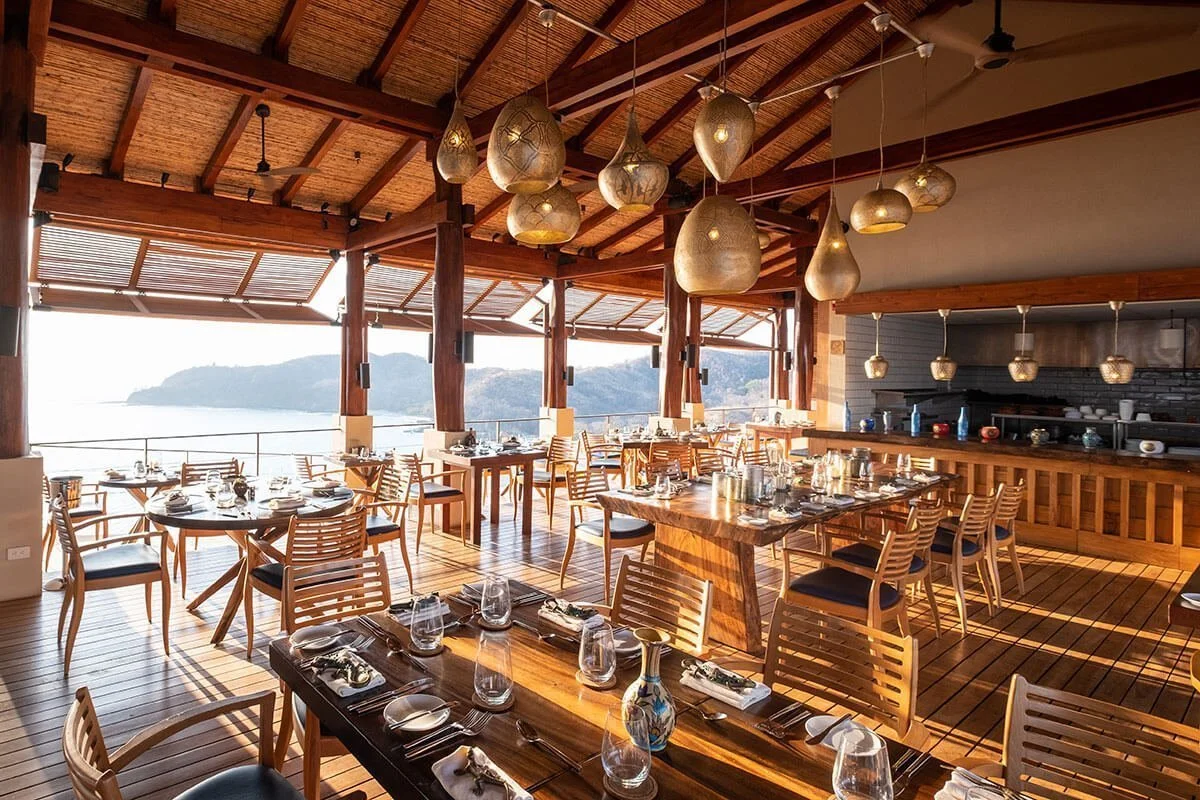
Sentido Norte: the open-air restaurant at Casa Chameleon, set on the cliffs above town, describes its food as coastal Costa Rican with sea-to-table and farm-to-table ingredients. A private staircase connects Villa Alberti’s street to Casa Chameleon, so this is the easiest special-occasion dinner in town. It welcomes guests aged 10 and over.
La Pampa Grill: also part of Casa Chameleon, built around open-fire cooking and slow-cooked meats. Good for a group that wants a long, meaty dinner.
Ponciana: the restaurant at the Santarena Hotel, a few steps from the beach, with a Mediterranean approach applied to Costa Rican ingredients from the sea, mountains and farms.
Tamaki: Japanese-Peruvian cooking, which suits the local tuna well.
Pots & Bowls: a casual café close to the beach for breakfast and lunch.
Celeste: right on the beach and a popular choice at golden hour.
For snacks, coffee and supplies, the Copper & Stone market is in town. Groups that would rather arrive to a full kitchen can have groceries stocked before they land.
Having It Cooked at Villa Alberti
The restaurants are good, but the corn dishes above are hard to find on any menu, and a group of fifteen does not always want to walk to dinner. That is where Villa Alberti’s executive chef comes in.
The chef plans menus around each group, working with local ingredients and whatever dietary needs the guests bring. Ask in advance and a regional dinner can be built around the dishes in this guide: arroz de maíz on the table, fresh tortillas, the day’s fish served as ceviche or seared, and tres leches or flan to finish.
A few ways guests use the chef for local food:
A Guanacaste night: one dinner of the week given over to regional cooking, served on the rooftop as the sun sets over the Pacific.
Cooking your own catch: the concierge can arrange a dawn artisanal fishing trip with local fishermen, and the chef will cook what comes back that evening.
A ceviche lunch after the beach: simple, cold and made with fish bought that morning.
Local breakfasts: fresh tortillas, cuajada, fruit and Costa Rican coffee, served when the group is ready rather than before a restaurant closes its breakfast service.
Requests are easiest to accommodate when they are shared before arrival, alongside any allergies or dietary preferences. It also helps to decide early how you want to balance chef nights with meals in town.

A Sample Guanacaste Dinner at the Villa
This is an example of a menu a group might request. The chef will adjust it to the season, the catch and the people at the table.
To start: corvina ceviche with lime and cilantro, and warm tortillas revueltas with fresh cheese.
First course: a small bowl of arroz de maíz.
Main: whole red snapper or seared local tuna, with patacones and a green salad.
To drink: chicheme for anyone curious, a cold Imperial, or a bottle from the villa’s wine cellar.
Dessert: tres leches, flan, and a few pieces of cajeta with coffee.

Planning Your Food Week in Las Catalinas
For a week-long stay, one pattern works well: breakfast at the villa, lunch in town or at the beach, and an even split of dinners between the chef and the town’s restaurants. Save one dinner for Sentido Norte, one for a Guanacaste night at the villa, and leave at least one evening unplanned. The days in between fill easily with boat trips, trail rides and surf lessons, and a three-day Las Catalinas itinerary works as a template for a shorter visit.
Frequently Asked Questions
What food is Guanacaste known for?
Corn-based dishes such as arroz de maíz, hand-patted tortillas, rosquillas, tanelas and tamal asado, along with fresh Pacific seafood like corvina ceviche and whole fried snapper.
Can you find traditional Costa Rican food in Las Catalinas?
Yes. Sentido Norte focuses on coastal Costa Rican cooking, and several other restaurants in town use local ingredients. The more traditional Guanacaste home dishes are harder to find on menus, which makes them a good request for the villa chef.
Can the chef at Villa Alberti cook local dishes?
Yes. Regional dishes, fresh ceviche, and fish from a fishing trip can all be requested. Sharing requests before arrival gives the kitchen time to source ingredients.
What is the best restaurant in Las Catalinas for a special dinner?
Sentido Norte, up the hill at Casa Chameleon, is the usual choice for a celebration. It is a short walk from Villa Alberti by a private staircase.
Do you need reservations?
For Sentido Norte and for groups at any restaurant, reserve ahead, especially in the dry season from December to April. The Villa Alberti concierge can book tables before you arrive.
Plan a Stay Built Around Good Food
Villa Alberti sleeps up to 21 guests in seven suites, with an executive chef, bartenders and a concierge who can mix the best of Las Catalinas’ restaurants with chef-cooked nights at home. Share your dates and group details, and let us know which dishes you want to try.
