

The Catalina Islands are a group of rocky islets off the coast of Guanacaste and one of Costa Rica's best-known dive areas, famous for giant manta rays, large schools of fish, and frequent encounters with rays, turtles, and reef sharks. Manta ray season runs from about December to April, when cooler, nutrient-rich water arrives. Las Catalinas sits on the same stretch of coast, so a stay at Villa Alberti puts these dive sites within easy reach.
Key Takeaways
The islands offer dives from shallow reefs to about 100 feet.
Manta rays are most often seen from about December to April.
Dry-season water can be cooler, with thermoclines, so pack or rent a thicker wetsuit.
First-time divers can start with a Discover Scuba session before heading out.
About the Catalina Islands
The islands lie roughly eight miles off the coast, about a 30 to 40 minute ride by speedboat from the main dive harbors, according to Capture the Atlas. Dive sites range from about 40 to more than 100 feet, with visibility typically between 25 and 60 feet. Local dive center Saguaro Scuba lists mobula and cownose rays, stingrays, moray eels, whitetip reef sharks, octopus, and turtles among the regular sightings.
When to Dive the Catalina Islands
Conditions change with the seasons. The table below compares the two halves of the year.
Catalina Islands Conditions by Season
| December to April | May to November | |
|---|---|---|
| Water temperature | Cooler, about 66 to 77°F, with colder thermoclines | Warmer, up to about 80°F |
| Visibility | Variable, often lower with plankton | Often clearer, best around September to November |
| Wildlife highlights | Giant manta rays, northern humpback whales | Schools of fish, rays, turtles, southern humpbacks |
| Sea conditions | Papagayo winds can bring stronger currents | Calmer winds, afternoon rain on land |
Based on Saguaro Scuba and Capture the Atlas. Conditions vary by day, and marine life sightings are never guaranteed.
Manta Rays and Other Marine Life
Giant manta rays are the headline. They are most often seen from about November or December to April, with a peak from January to March, according to Capture the Atlas. Villa Alberti's things to do page notes that manta rays pass through the Catalina Islands between December and April. Encounters are never guaranteed, but the season gives you the best odds.
Even without mantas, the dives are rich. Large schools of fish, rays gliding over the sand, and eels tucked into the rocks are common. Humpback whales and dolphins are sometimes seen from the boat on the way out in season.
Diving Options From Las Catalinas
Villa Alberti's concierge can arrange several ways to explore the water:
Discover Scuba. A guided first dive for guests who have never dived before.
Diving and snorkeling expeditions. Boat trips out to the Catalina Islands with a licensed operator.
Citizen science dive. A working dive alongside marine researchers, contributing to reef and shark monitoring.
Sunset snorkel. A quieter evening in the water with a mask, closer to shore.
Certified divers should bring their certification card and logbook. An Open Water certification is enough for many sites, though some deeper or current-swept dives suit more experienced divers. Outings are arranged on request and may carry separate charges.
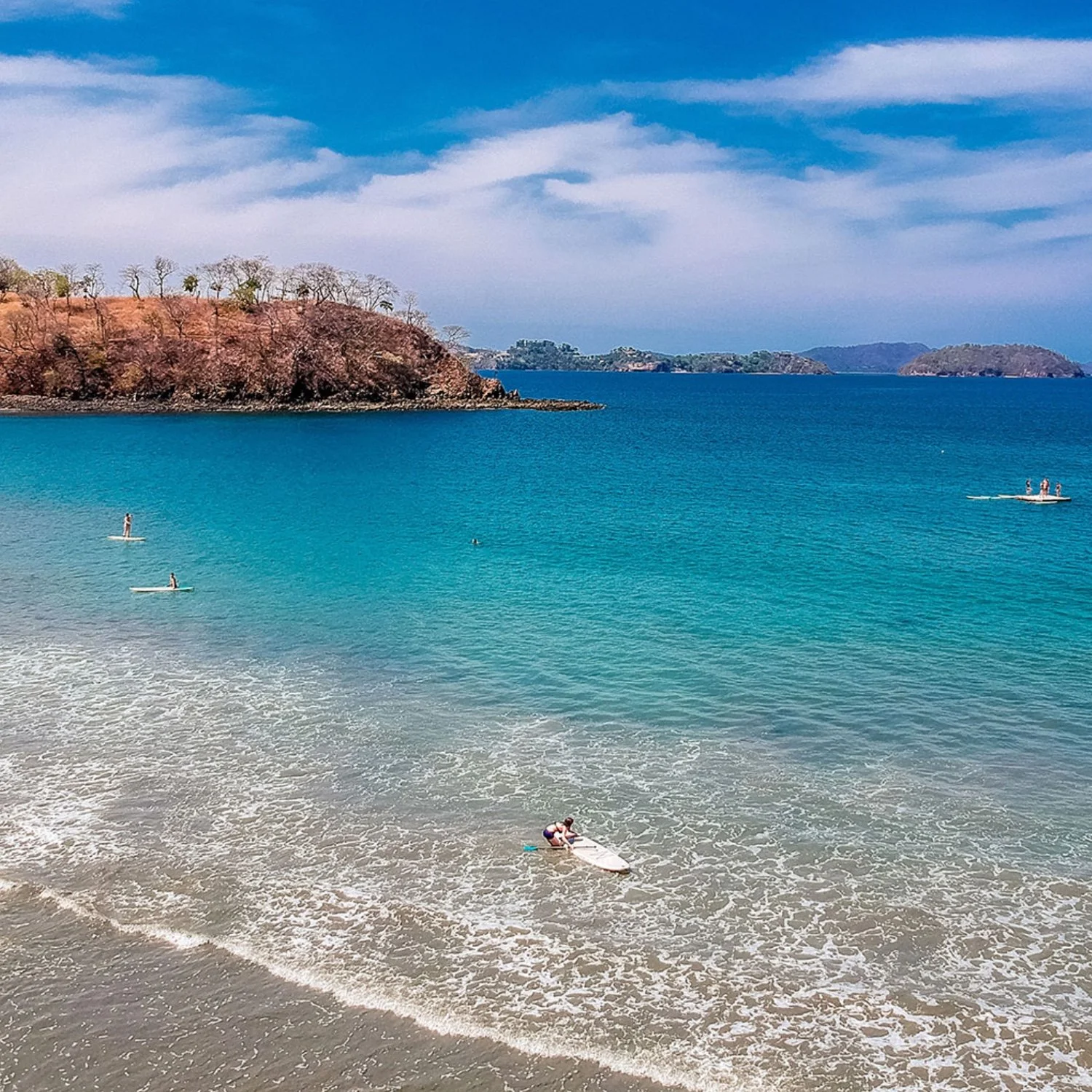
Clear water near Las Catalinas. For relaxed snorkeling, the calm beaches close to town are often a better start than open-water island sites.
Snorkeling Near Las Catalinas
The Catalina Islands are best known as a dive destination, and open-water conditions can be challenging for beginners. For relaxed snorkeling, the calm water at Playa Danta and Playa Dantita is often a better starting point. Our guide to snorkeling at Playa Danta and Playa Dantita covers the best spots, and our guide to water activities in Las Catalinas lists more ways to get on the water.
Underwater Photography Tips
Mantas and schooling fish make the Catalina Islands rewarding for photographers. A wide-angle lens suits large animals, while a red filter or strobe helps restore color at depth. Stay low and still, let animals approach on their own, and never touch or chase marine life. On lower-visibility days, get closer rather than zooming in.
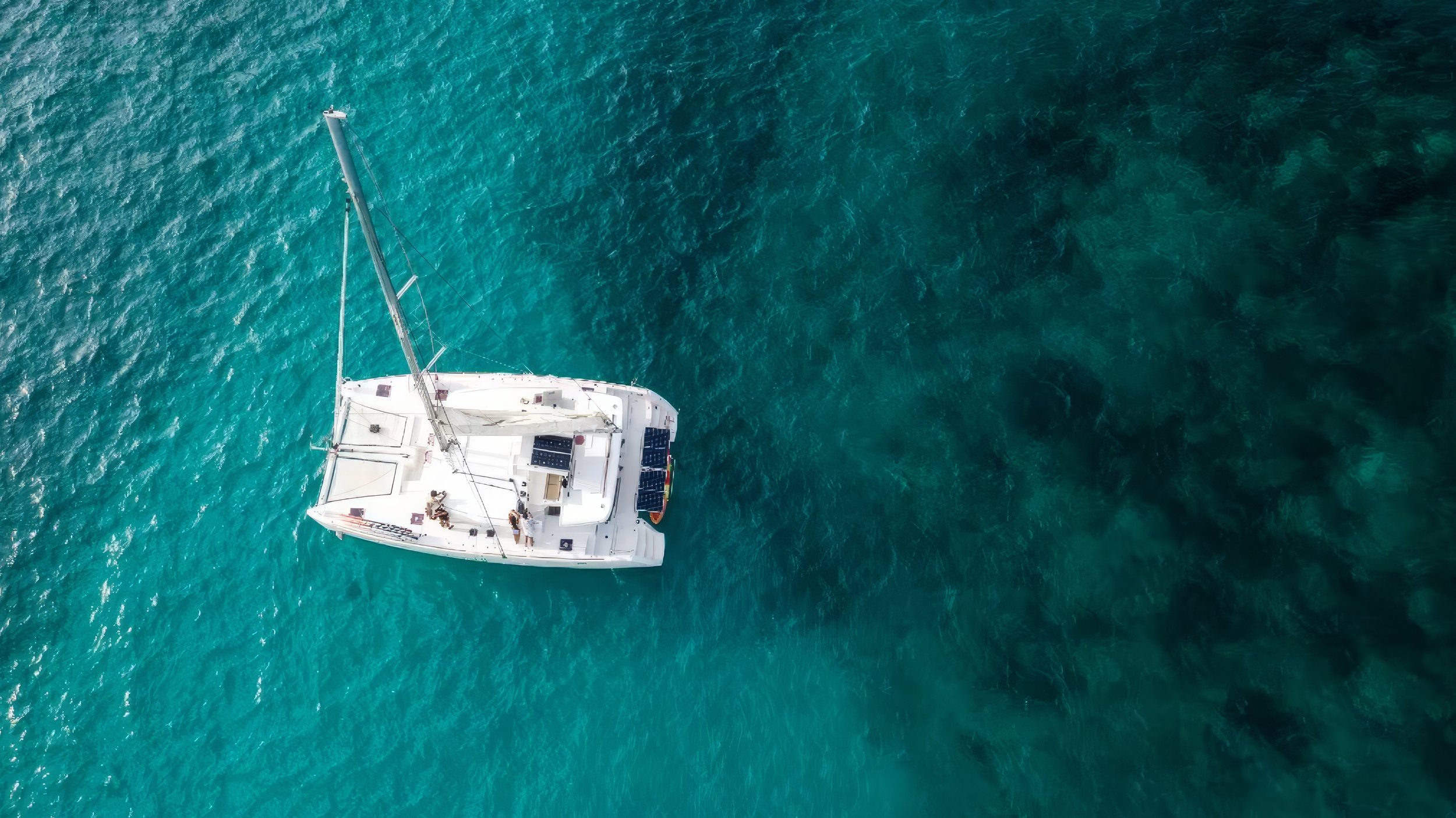
A catamaran anchored in turquoise water off the Guanacaste coast. Boat days can pair a morning dive with snorkeling and time on deck.
A Typical Dive Day
Most Catalina Islands trips leave in the morning, when the sea is often calmer. A two-tank dive usually includes a surface interval on the boat, with snacks and time to spot birds, rays, or the occasional whale. Groups are typically back by early afternoon, leaving time for lunch, a nap, and sunset on the villa's rooftop. Mixed groups can split up, with divers heading out while others stay for the beach, the pool, or the trails.
Safety and Choosing an Operator
Choose a licensed operator with experienced guides, well-maintained equipment, and clear briefings. Ask about group size, the planned sites, and how they handle currents and changing conditions. Do not fly within 18 to 24 hours of diving, so plan dives early in the stay rather than on your last day.

Clear Pacific water along the Guanacaste coast. Visibility at the Catalina Islands is often best from about September to November.
What to Pack
Certification card and dive log, if certified.
A 5mm wetsuit or hood for dry-season dives, when thermoclines can drop to the low 60s.
Reef-safe sunscreen, a hat, and a light layer for the boat ride.
Motion sickness remedies for windy days.
Frequently Asked Questions
Do I need to be certified to dive the Catalina Islands?
Yes, for regular dives. Non-certified guests can start with a Discover Scuba session with an instructor.
What is the best month to see manta rays?
January to March typically offers the best chances, within a season of about December to April.
Is snorkeling good at the Catalina Islands?
Some trips include snorkeling, but conditions vary. Calm beaches near Las Catalinas are better for beginners and children.
Plan a Dive Trip at Villa Alberti
Share your preferred dates and group details below. The Villa Alberti team will follow up to discuss availability and how to plan your days on the water.
