

How Should You Plan Meals for a Large-Group Luxury Villa Stay in Costa Rica?
For most groups, the best meal plan is a mix: one or two fully handled dinners, simple breakfasts in the villa, flexible lunches, and one or two meals out when the destination makes that easy. That usually gives you the convenience of a private chef or staffed support without overproducing meals or locking the whole trip into a rigid food schedule. The main trade-off is control versus flexibility: the more you outsource dining, the easier the stay feels, but the less spontaneous it becomes.
That matters because meal planning is one of the biggest hidden friction points in a large-group villa trip. A group can have the right destination, the right bedrooms, and the right views, then still feel disorganized if nobody has decided how breakfasts work, when groceries arrive, or whether dinner is being handled in-house or out. For Villa Alberti specifically, meal planning is especially relevant because the property features a fully staffed hospitality experience in Las Catalinas.
Start with the real question: how much do you want to think about food?
The best villa dining strategy is not about maximizing every meal. It is about deciding how much decision-making your group wants each day.
Some groups want:
breakfast ready with minimal effort
a chef-led signature dinner a few nights
easy snacks and drinks always available
freedom to go into town for a meal when it feels fun
Other groups want nearly everything handled in-villa.
Both approaches can work. The mistake is assuming you should do the same thing for every meal.
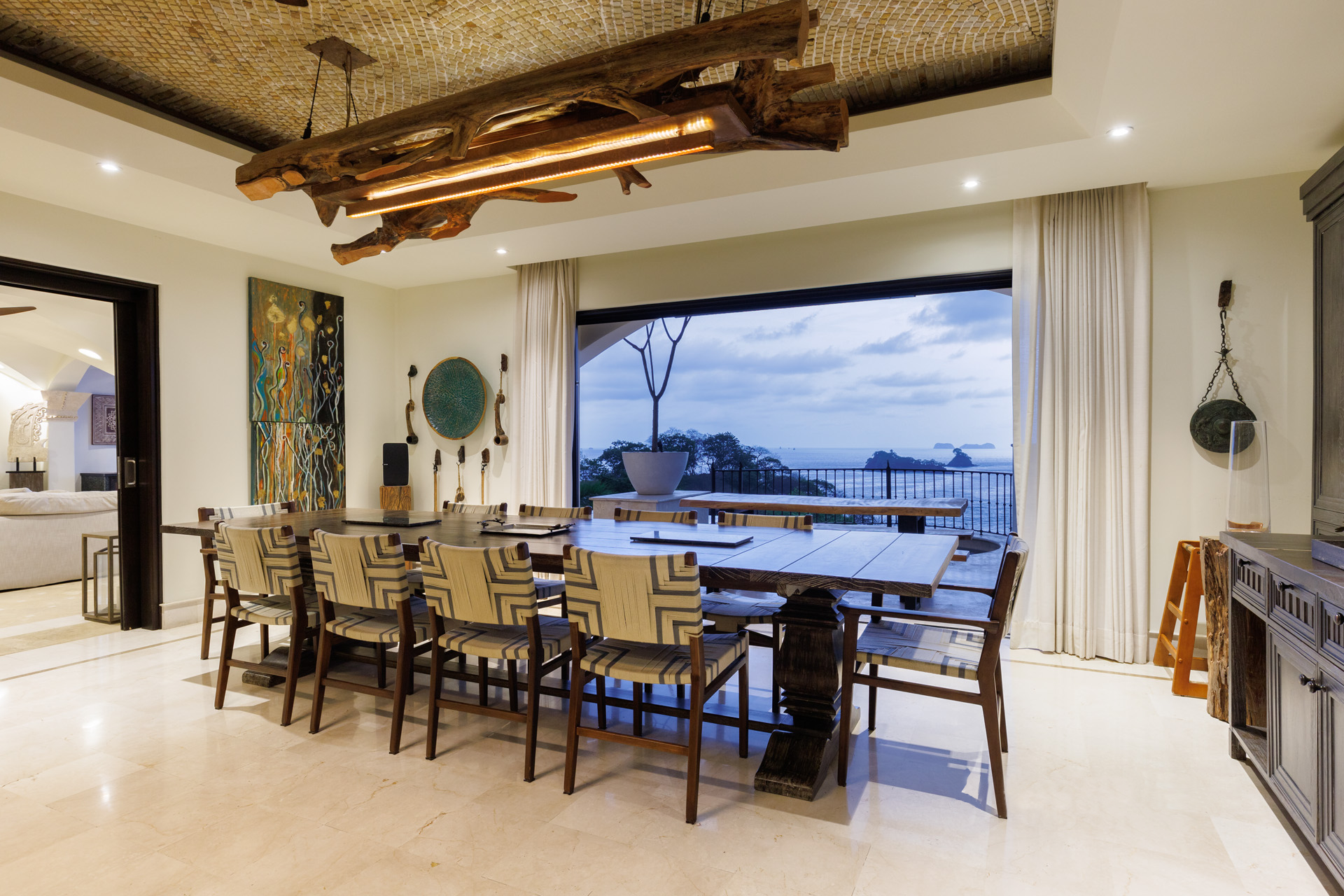
A good large-group meal plan usually looks like this
For a 4- to 7-night luxury villa stay, a balanced structure often works best:
Breakfasts stay simple.
Lunches stay flexible.
Dinners get the most planning.
That is usually because breakfast is the easiest meal to standardize, lunch depends on whether people are at the villa or out, and dinner is where the group most wants to gather.
In practical terms, that often means:
grocery pre-stocking before arrival
self-serve or lightly supported breakfasts
casual lunches based on the day’s activity level
2 to 4 planned group dinners
1 to 2 meals out if the location supports it
That model fits the way villa concierges in Costa Rica typically sell the experience: chef dinners, provisioning, and local flexibility rather than a hotel-style all-inclusive structure.
Breakfast should be the easiest meal of the day
For most large groups, breakfast is where overplanning hurts the most.
People wake up at different times. Kids want food earlier than adults. Some guests want coffee and fruit. Others want a full meal. If breakfast requires too much coordination, the whole day starts with friction.
A better approach is usually:
stocked coffee and tea
fresh fruit
yogurt and pastries
eggs and simple breakfast staples
one easy hot option if support is available
For a fully staffed luxury villa, breakfast can sometimes be lightly handled as part of the stay rhythm. For other villas, grocery pre-stocking does most of the work.
Lunch should depend on the day
Lunch is the meal most groups should keep loose.
That is because lunch changes based on whether people are:
at the pool
out on a boat
doing a half-day activity
at the beach
splitting into smaller groups
Trying to lock every lunch into a formal group event usually creates unnecessary work.
A better Costa Rica villa meal strategy is often:
poolside snacks and simple lunch ingredients at the house
one easy chef-prepped lunch on a full villa day
packed or light lunches on activity days
casual local lunch when you are already out
This is especially true in Las Catalinas, where in-town dining is part of the destination experience
Dinner is where planning matters most
Dinner is usually the meal worth planning in advance.
It is the one time when large groups are most likely to be together. It is also the meal where luxury villa stays can feel meaningfully different from hotels or ordinary rentals. A chef-led or fully supported dinner usually creates the strongest sense of occasion, especially for family reunions, celebration trips, or multigenerational stays. Rental Escapes explicitly describes chef service for dinners built around local seafood and fresh ingredients as part of the Costa Rica villa experience.
For most groups, a strong dinner plan looks like:
first-night dinner already decided
at least one signature in-villa dinner
one low-effort casual dinner option
one meal out if the destination makes that worthwhile
That first-night piece matters most. After a travel day, the group usually wants certainty, not a discussion.
A private chef is usually most valuable when used selectively
Many travelers assume that if a private chef is available, they should use one for every dinner. That is not always true.
A chef is often most valuable for:
arrival night
one or two celebration dinners
a full villa day when nobody wants to leave
a farewell dinner for the group
Using a chef every night can work, but it can also reduce flexibility and raise expectations around meal timing and attendance. For some groups, it is better to use chef support strategically and leave room for the destination.
Villa Alberti’s own chef page frames private dining as a planned, supported part of the stay rather than an afterthought, which is the right mindset. The point is not just to have chef access. It is to use it where it improves the trip most.
Grocery pre-stocking is one of the highest-value services
For a large-group luxury villa stay, grocery pre-stocking is often more useful than people expect.
It solves:
arrival-day hunger
breakfast on the first morning
drinks and snacks
dietary-specific basics
child-friendly staples
the need for an immediate grocery run
Luxury villa programs in Costa Rica repeatedly market villa pre-stocking because it removes one of the biggest sources of guest effort.
For families and multigenerational groups, this is especially important. A beautifully designed kitchen means very little if nobody wants to run out for milk, fruit, snacks, and coffee right after landing.
Plan around the destination, not just the villa
A meal plan should reflect where you are staying.
In a more isolated villa, you may want more dinners handled in-house. In a destination with easy dining access, you may want more flexibility.
So for Villa Alberti, a smart meal plan is usually not “everything at the villa.” It is “the right meals at the villa.”
Think in meal categories, not just menus
For a group, it helps to decide meals by function:
Recovery meals: arrival night, morning after travel, post-excursion lunch.
Celebration meals: birthday dinner, family gathering, chef-led sunset dinner.
Easy default meals: poolside lunch, breakfast staples, kid-friendly fallback options.
Local-experience meals: one or two town meals that make sense because of the location.
That framing is more useful than trying to choose every dish in advance.
Do not ignore dietary logistics
Large groups almost always include at least some combination of:
children with narrow preferences
gluten-free or dairy-free guests
pescatarians or vegetarians
alcohol preferences
guests who eat earlier or later than the rest of the group
This is where meal planning can become either invisible or exhausting.
The best approach is usually to decide those needs before groceries are ordered or chef menus are discussed. Costa Rica villa concierge programs commonly position custom menus and dietary accommodation as part of chef service, which is one more reason to lock in the core dinner plan before arrival.
A few Costa Rica-specific food choices make the stay feel more rooted in place
The meal plan should not be so generic that the group could be anywhere.
Costa Rica’s tourism board highlights local cuisine as part of the country’s cultural identity, and Guanacaste is widely associated with dishes and ingredients shaped by corn, seafood, tropical fruit, and regional cooking traditions.
That does not mean every meal has to be “traditional.” It means one or two meals should feel local. For example:
fresh seafood dinner
tropical fruit-heavy breakfast spread
Guanacaste-influenced lunch or side dishes
one dinner out that reflects the area rather than generic international food
This usually gives the trip more character without forcing every guest into the same culinary mood.
What works especially well for families
For families, the best villa dining planning in Costa Rica is usually:
pre-stocked breakfast basics
kid-friendly snacks always available
one easy first-night dinner
one chef-led dinner adults can enjoy without logistical stress
lunches that can flex around pool or beach time
The key is reducing meal-related decision fatigue. Families do not usually need more food complexity. They need more reliability.
What works especially well for celebration groups
For adult celebration groups or milestone trips, a stronger dinner structure usually makes sense:
arrival cocktails and light bites
one signature chef-led dinner
one dinner out
one casual villa dinner
breakfast and lunch kept lighter and more flexible
That keeps the stay feeling elevated without turning every meal into an event.
Where Villa Alberti fits
Villa Alberti is especially well suited to a mixed meal strategy because the property offers both hospitality support and walkable destination access.
That means the smartest Villa Alberti meal plan is usually:
groceries stocked before arrival
first-night dinner already handled
1 to 3 in-villa chef or chef-supported dinners
breakfasts designed to be easy
flexibility to walk into town for selected meals
The bottom line
The best meal plan for a large-group luxury villa stay in Costa Rica is usually a balanced one: easy breakfasts, flexible lunches, and intentionally planned dinners. Grocery pre-stocking and selective chef support do more to improve the stay than trying to formalize every meal. The right plan depends on the group, but in most cases the goal is simple: make food feel handled without making the trip feel overprogrammed.
