

Navigating Hurricane Season in Costa Rica: What It Means for Las Catalinas and Villa Alberti
Key Takeaways
If you want the short version, here it is:
Costa Rica is rarely best understood through ‘hurricane season’ alone; for most travelers, the real question is how the green season affects the specific region they are staying in.
Las Catalinas is in Guanacaste, one of Costa Rica’s driest regions, so it is generally better positioned than wetter parts of the country for travelers who want a beach-based stay during the wet season.
In Guanacaste, the dry period usually runs from December to March, April is transitional, May to August brings the first major rains, July and August often include a drier break known as the veranillo, and September to November brings a second rainy period.
For a stay in Las Catalinas or Villa Alberti, the most likely impact is afternoon rain or weather-driven activity adjustments, not a trip defined by nonstop storm conditions. Las Catalinas’ own green-season descriptions highlight clear mornings, afternoon clouds or rain, cooler temperatures, and strong sunsets.
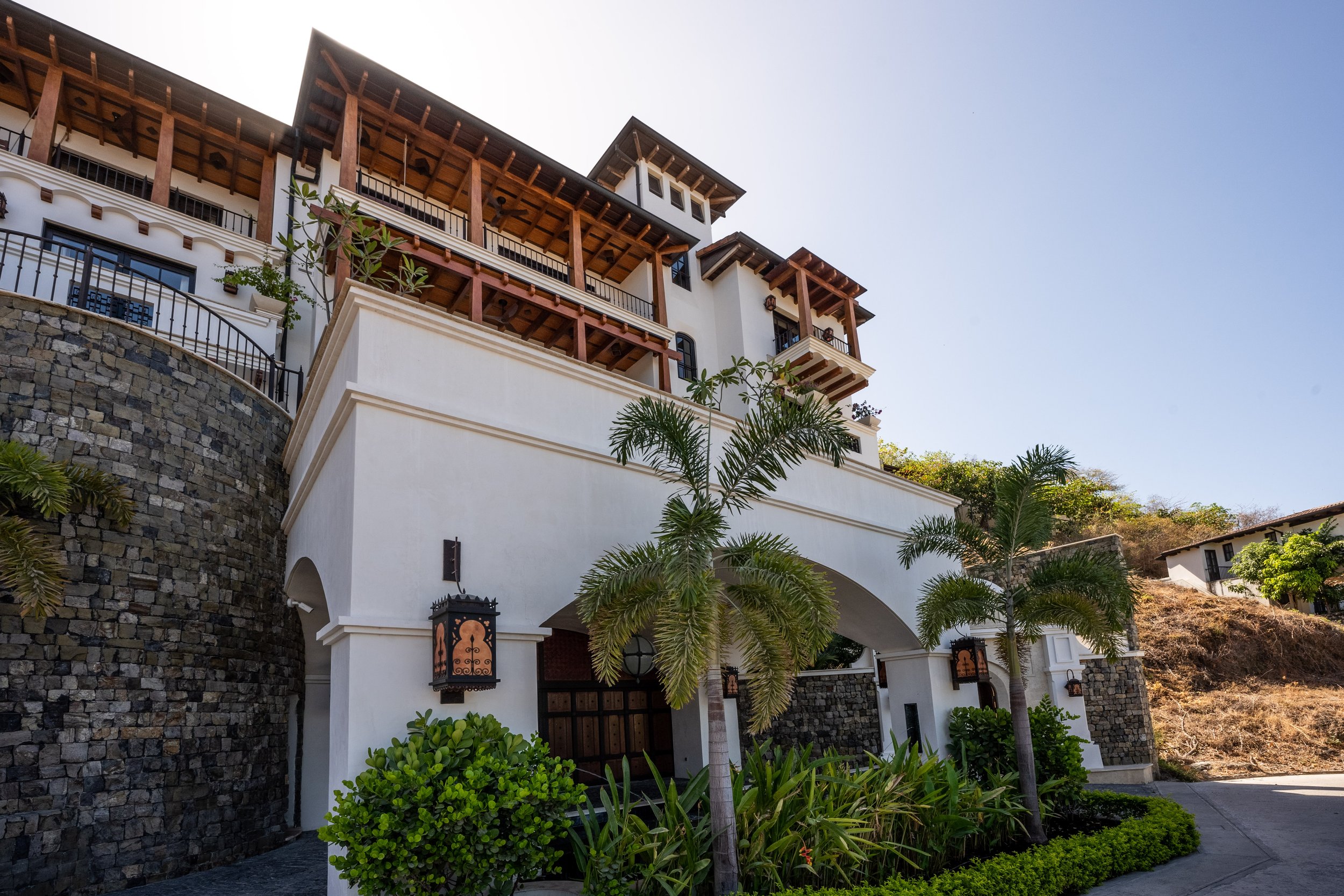
Villa Alberti fits well for this kind of trip because it is a fully staffed villa in the heart of Las Catalinas, with indoor-outdoor living and walkable access to beaches and trails, which gives guests more flexibility when weather shifts.
Is there really a “hurricane season” in Costa Rica?
Yes, in the sense that Costa Rica is affected by the broader Atlantic and Eastern Pacific tropical cyclone calendars. The National Hurricane Center’s season dates are the clearest reference point: Atlantic June 1 through November 30, Eastern Pacific May 15 through November 30.
But for travelers, Costa Rica is usually discussed more practically as a country of regional climates and wet-versus-dry travel patterns. The Costa Rica Tourism Board emphasizes that no two areas are exactly alike and that altitude, coastline, and ecological surroundings all affect the local climate.
So the better framing is this: Costa Rica is not a destination where every coast behaves the same way during hurricane season. Your experience depends heavily on which region you choose.
What hurricane season usually means for a Costa Rica vacation
For many travelers, “hurricane season” in Costa Rica means:
greener landscapes
fewer crowds
more variable skies
afternoon rain more often than all-day washouts
greater need for itinerary flexibility
Costa Rica’s tourism board notes that the green season brings sporadic bursts of rainfall, lush landscapes, cooler weather, and lighter crowds. It also notes that some hotels and attractions may close seasonally in parts of the country, especially on the southern end, which is one reason location choice matters.
That is why the practical travel question is not “Will it rain?” It is “How does rain change the way I want to stay?” For beach towns and private villas, the answer is often to plan around the most reliable parts of the day and choose lodging that still feels enjoyable when plans shift.
What to expect in Las Catalinas during the green season
Las Catalinas has a few advantages in this conversation.
First, it is located in Guanacaste, which Visit Costa Rica describes as the country’s driest region. Second, Las Catalinas is a car-free, fully walkable beach town, which changes how weather affects your day. If a shower moves in, you are usually adjusting a walkable plan, not rebuilding a multi-car, multi-stop excursion day.
For Guanacaste specifically, the Costa Rica Tourism Board says the first major rainy period runs from May to August, with June as an early peak month, and that July and August often bring a Pacific veranillo, or drier midsummer break. The second rainy period runs from September to November before the region transitions back toward the dry season.
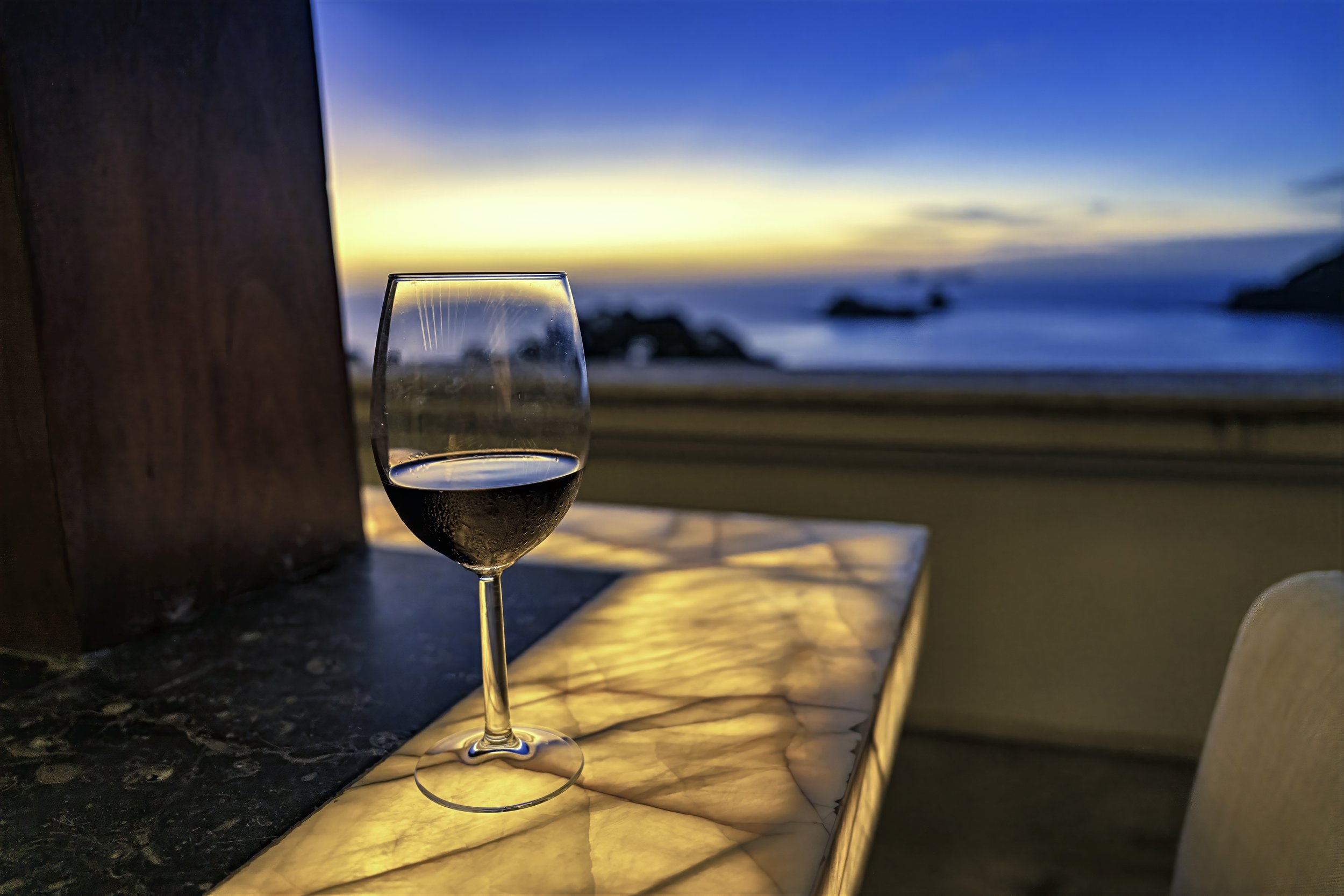
Las Catalinas’ own green-season content describes the period in a way that will sound familiar to many Costa Rica travelers: clear mornings, clouds in the afternoon, maybe some rain, cooler temperatures, high humidity, and great sunsets. That is a useful planning model because it points to the daily rhythm that works best.
Hurricane Season vs Green Season
These two phrases are often used as if they mean the same thing, but they are not identical.
Hurricane season refers to the broader Atlantic and Eastern Pacific tropical cyclone calendars. It is a regional weather framework, not a precise description of what daily travel will feel like everywhere in Costa Rica.
Green season refers to Costa Rica’s wetter travel period, when the landscape turns lusher, rain becomes more frequent, and the day often follows a different rhythm. In many parts of the country, especially on the Pacific side, that usually means clearer mornings, more clouds or showers later in the day, and a greater need for itinerary flexibility.
For most travelers, this is the key distinction: Costa Rica is usually experienced through green-season patterns more than through classic hurricane conditions. That is especially true in Guanacaste, where travelers are often dealing with seasonal rain timing rather than nonstop storm disruption.
How this may affect a stay in Las Catalinas
For most guests, rainy-season travel in Las Catalinas changes timing more than it changes whether the trip works.
Morning is often the best window for:
beach time
hiking and trail walks
paddleboarding or water activities
family outings that benefit from drier conditions
Afternoons are better treated as flexible:
pool time back at the house
lunch and slower indoor-outdoor time
reading, games, spa-style downtime, or a longer meal
a second beach outing only if conditions cooperate
The biggest advantage of Las Catalinas is that the town format supports this flexibility. Because it is walkable, guests can split up and regroup without needing to constantly solve transportation.
Where Villa Alberti fits
Villa Alberti is perfect for travelers navigating Costa Rica’s wet-season uncertainty because it is not just a place to sleep. Its site presents it as a fully staffed, 12,500-square-foot estate in the heart of Las Catalinas, with indoor-outdoor living and walkable access to Pacific beaches and trails.
That matters in green season for three reasons.
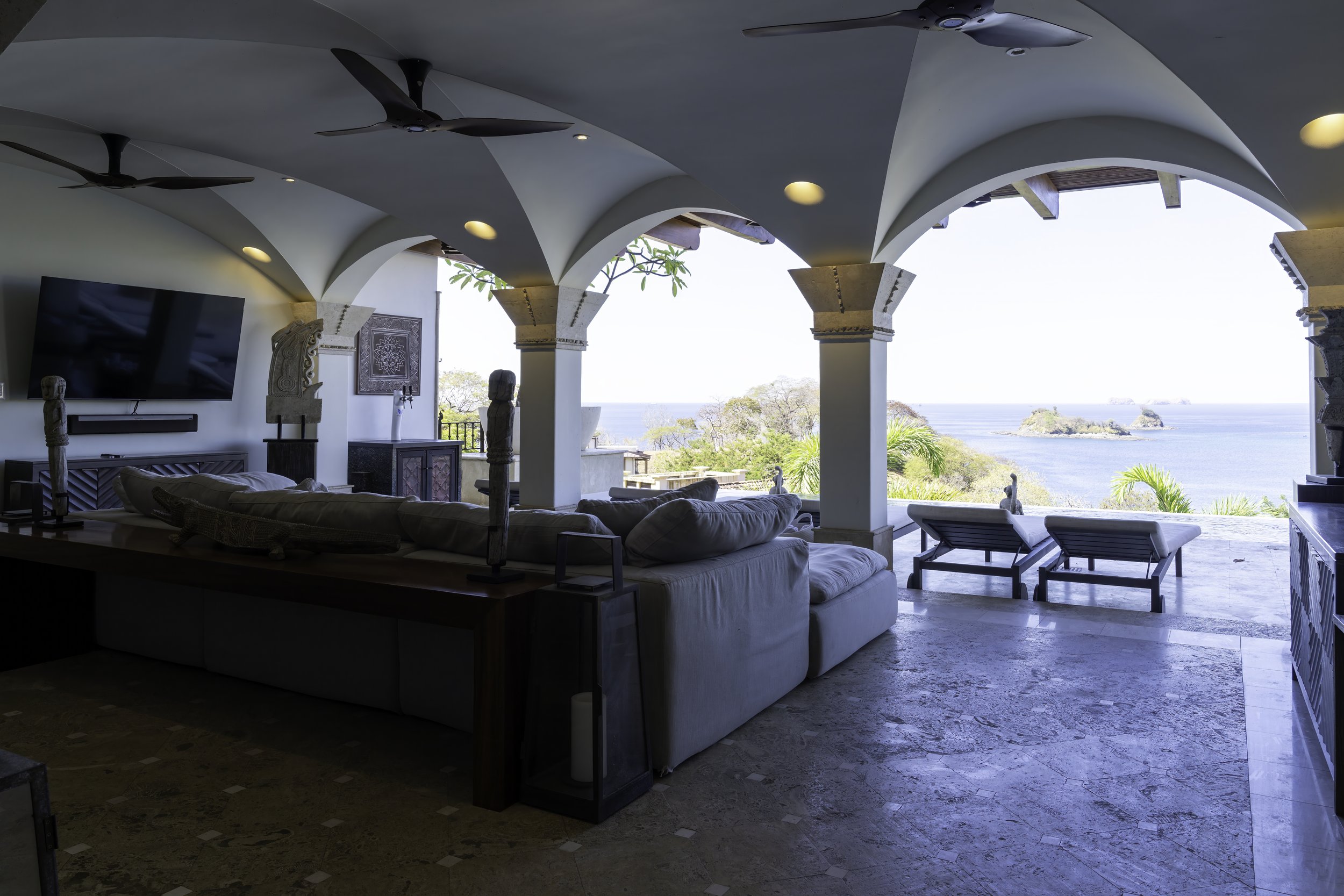
First, a fully staffed villa gives you more room to adjust the day without losing the day. If the weather shifts, you still have a meaningful home base for meals, family time, and downtime. Second, the indoor-outdoor design makes the villa itself part of the experience rather than a fallback. Third, the walkable Las Catalinas setting reduces one of the most common rainy-season frictions in Costa Rica: getting everyone in and out of cars repeatedly.
For larger groups, that can be the difference between “weather changed our schedule” and “weather derailed the trip.” That is where Villa Alberti feels especially relevant.
When hurricane season is more of a concern
It is still worth being realistic. Rainy-season travel works best for travelers who are comfortable with some flexibility.
You may want extra caution if:
your group wants a rigid, packed activity schedule
you are planning many long road transfers
you dislike any uncertainty around outdoor plans
you are traveling in the wetter part of the season and want every day to be beach-perfect
Visit Costa Rica also notes that in fall, some hotels and attractions may close completely in parts of the country, particularly the southern end, and that the Caribbean coast can sometimes be a better seasonal bet during that time. That does not make Las Catalinas a poor choice. It just reinforces that region and trip style matter more than broad country-level labels.
Practical tips for navigating the season well
The best rainy-season Costa Rica trips usually follow a simple pattern.
Plan your most weather-sensitive activities in the morning. Use the afternoon for flexible beach time, the pool, lunch, or villa-based downtime. Choose a property where being “at home” still feels like part of the vacation. And monitor official weather updates as your dates approach, especially if you are traveling during the broader tropical cyclone window.
For Las Catalinas specifically, the walkable setting already helps. For Villa Alberti specifically, the fully staffed setup and indoor-outdoor design make that flexibility easier to enjoy.
FAQs
When is hurricane season in Costa Rica?
The regional tropical cyclone seasons that affect Costa Rica run May 15 to November 30 in the Eastern Pacific and June 1 to November 30 in the Atlantic, according to the National Hurricane Center. Costa Rica tourism guidance, however, more commonly describes travel in terms of the dry season and the green or wet season, which usually runs from May through mid-December.
Is Las Catalinas a bad idea during hurricane season?
Not necessarily. Las Catalinas is in Guanacaste on the North Pacific coast, and Guanacaste is described by Visit Costa Rica as the country’s driest region. Travelers there are usually navigating green-season rain patterns rather than assuming constant storm conditions.
What is the weather pattern like in Las Catalinas during the wet season?
Las Catalinas’ own seasonal guidance describes clear mornings, afternoon clouds or rain, cooler temperatures, and great sunsets during green season. In practical terms, that usually means mornings are best for beaches, trails, and activities, with more flexibility needed later in the day.
How could the season affect a stay at Villa Alberti?
The main impact is usually on timing and flexibility, not whether the stay works at all. Villa Alberti’s fully staffed setup, indoor-outdoor design, and walkable Las Catalinas location help guests enjoy the trip even when plans shift with the weather.
Is green season still a good time to visit Costa Rica?
Yes, for many travelers, the green season brings lush landscapes, cooler weather, and lighter crowds, though it also requires more flexibility and some regional awareness.
Final takeaway
Navigating hurricane season in Costa Rica is really about understanding green-season travel, regional differences, and your own tolerance for flexibility. For Las Catalinas, the story is generally favorable: Guanacaste is Costa Rica’s driest region, the town is walkable, and the daily pattern often still leaves plenty of room for beach time, trails, and outdoor living.
Villa Alberti fits that setting well because it offers a fully staffed, group-friendly home base that still works beautifully when the weather shifts. For travelers who want Costa Rica’s greener, quieter season without giving up comfort, that combination is one of the strongest ways to make the trip feel smooth.
