

Is a Luxury Villa in Costa Rica a Better Fit for Families Who Want Shared Space?
Usually, yes. For families who care most about staying together in one place, sharing meals easily, and spending time in common areas without splitting into separate hotel rooms, a luxury villa is often the better fit than a hotel. The trade-off is that hotels can be easier for travelers who want highly standardized service, kids’ clubs, or less planning before arrival.
That distinction matters because “family-friendly” and “good for shared space” are not the same thing. A hotel can be excellent for a family vacation, but it often divides the group into separate rooms, separate floors, and separate rhythms. A villa is usually stronger when the goal is to make the family itself the center of the trip.
The real decision is not villa versus hotel
The real decision is this: do you want privacy and shared living, or do you want hotel infrastructure and standardization?
That is the choice most families are actually making.
A villa usually works better when the family wants:
shared breakfasts and dinners
one home base for grandparents, parents, and children
flexible nap, swim, and downtime rhythms
private common areas
less separation between households
A hotel usually works better when the family wants:
room service and front-desk simplicity
kids’ clubs or hotel programming
less need to think about layout and pre-arrival planning
more independence between family units
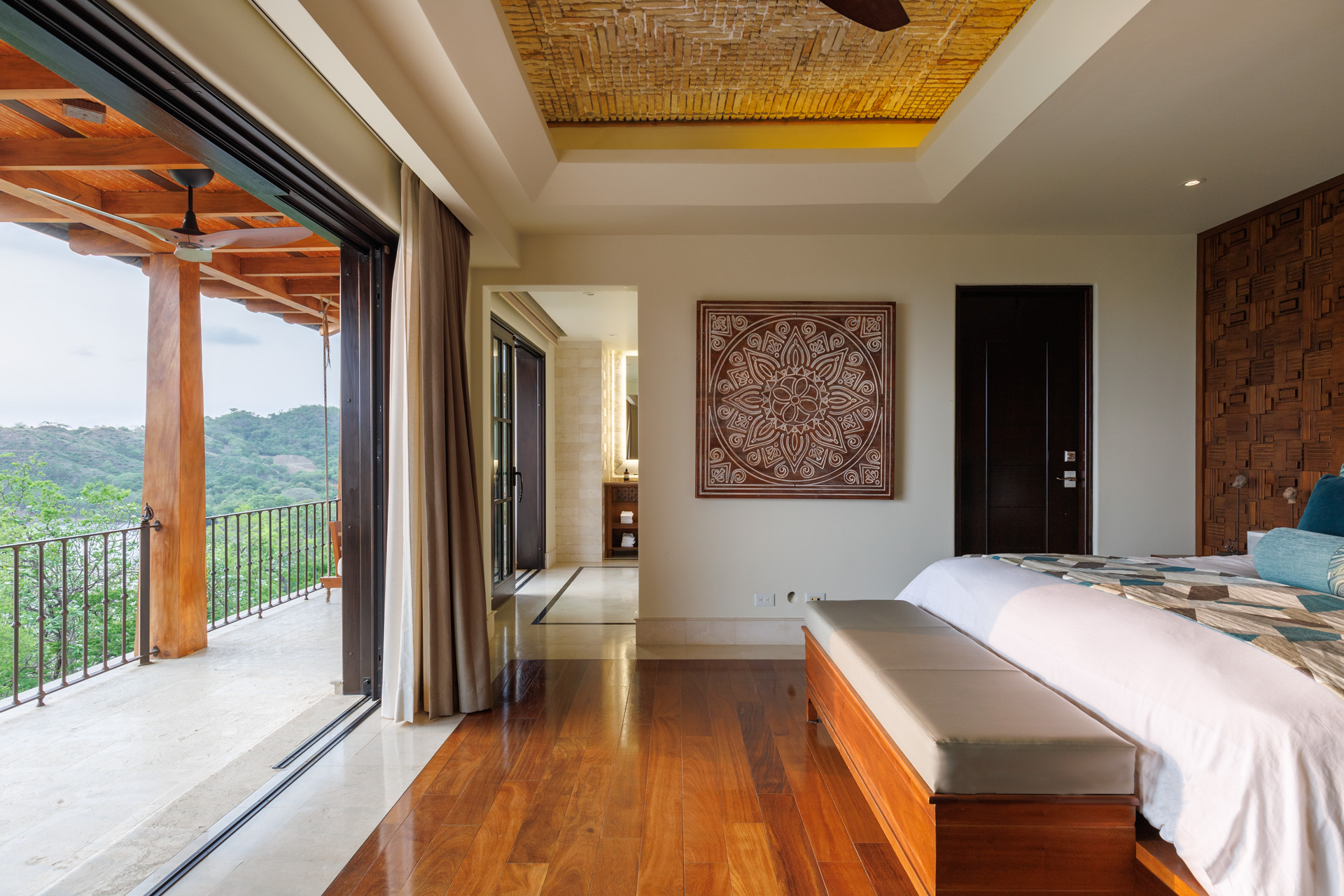
Why villas usually win on shared space
Shared space is where hotels often fall short for larger families.
Even a very good hotel stay usually means the group is split across multiple rooms or suites. That can work fine for sleeping, but it is less effective for the actual parts of the trip families remember: morning coffee together, pool downtime, meals, board games, movie nights, and the informal time between activities.
A villa changes that. Instead of meeting in a restaurant lobby or trying to coordinate adjoining rooms, the family has built-in common areas. ] The value is not just privacy. It is the ability to stay together without crowding each other.
What makes a villa better for shared space
A villa becomes the better choice when the family wants both togetherness and separation.
That sounds contradictory, but it is the point.
The best family group lodging in Costa Rica usually offers:
enough real bedrooms for privacy
large indoor and outdoor common spaces
dining areas that fit the whole group
a pool or outdoor area everyone can use
enough layout flexibility for kids, teens, and adults to move differently
Hotels can give you some of that, especially with large suites or multiple connecting rooms, but they rarely give you all of it in one private setting. Villas are designed around group flow in a way hotels usually are not.
When a hotel is still the better choice
A hotel is often the better fit when shared space is not the top priority.
For example, hotels can make more sense if:
the family wants kids’ clubs or resort programming
the group prefers everyone to have more separate autonomy
the trip is short and simplicity matters more than setup
the family is small enough that one or two suites solve the problem
nobody wants to think about grocery pre-stocking, chef services, or villa logistics
This is why the answer is not “villas are always better.” It is that villas are usually better for families who explicitly want shared space.
The hidden advantage of a villa: group rhythm
The biggest advantage of a villa is often not square footage. It is rhythm.
Hotels tend to push the day outward. You go to breakfast, then to the pool, then to the room, then back out again. That works well for some trips, but it can fragment a multigenerational family.
A villa pulls the day inward. Breakfast can happen in one place. Kids can swim while adults talk nearby. Grandparents can rest without leaving the group entirely. Dinner can happen without reservations or splitting tables. That is what makes a villa feel so different for shared-space family travel.
Why location still matters
Not every villa solves family logistics equally well. A villa can have plenty of shared space and still be inconvenient if every outing requires transport.
That is where destinations like Las Catalinas become relevant. Las Catalinas describes itself as a car-free, fully walkable beach town, which means a family can pair the privacy of a villa with easier movement to restaurants, beaches, and activities. For many families, that combination is stronger than either a remote villa or a traditional hotel.
This is an important point. Some families want a villa because they want shared space, but they do not want the trip to feel isolated. A walkable setting solves that.
What families should compare before choosing
Before deciding between a villa and a hotel in Costa Rica, compare these things:
1. Bedroom math
How many actual bedrooms do you need, and who is sharing?
Hotels often look simpler until you realize the family will need several rooms, maybe on different floors. A villa often solves that more cleanly.
2. Common-area usefulness
Will the family actually have a place to gather comfortably?
This is where villas usually win. Hotels provide shared public space. Villas provide shared private space.
3. Meal flow
Do you want to eat together easily, or are separate dining rhythms fine?
A villa usually makes shared meals much easier, especially when chef support or pre-stocking is available.
4. Age mix
Are you traveling with grandparents, toddlers, teens, or all three?
The wider the age range, the more valuable private shared space becomes. Villas tend to work especially well for multigenerational groups because people can spread out without becoming disconnected.
5. Destination friction
Will daily outings require constant transport?
A family villa in a walkable setting can be much easier than either a remote villa or a hotel where everything still requires coordination.
Where Villa Alberti fits in this comparison
Villa Alberti fits clearly on the villa side of this decision. It is a fully staffed 12,500-square-foot estate in Las Catalinas with seven suites, space for up to 21 guests in beds, a dedicated children’s suite, two pools, a media room, a rooftop lounge, and walkable access to trails and beaches. Those are exactly the kinds of features that make a villa stronger than a hotel for families who want shared space.
That does not mean it is right for every family. It means it is built for the kind of family trip where the group wants to stay together in a private, hospitality-led setting rather than split into hotel rooms.
When a villa is not the better fit
A villa may not be the better fit if:
the family prefers resort programming over private space
parents want hotel-style childcare or kids’ clubs
the group is too small to benefit from a large home
the family does not care about shared meals or common areas
the trip is more about resort amenities than family togetherness
Those are real trade-offs, and they are worth saying plainly.
The bottom line
If a family’s top priority is shared space, a luxury villa in Costa Rica is usually the better fit than a hotel. Villas are better at giving families private common areas, more natural togetherness, easier group meals, and a home base that supports different ages at once. Hotels are often better when the priority is standardization, resort programming, or minimal pre-trip planning.
For families who want to spend the trip together, not just near each other, the villa model usually wins.
