

Guanacaste vs. Manuel Antonio: Which Part of Costa Rica Should I Visit?
The fast answer
Choose Guanacaste if:
You want reliable dry season weather and consistent sunshine
Your group is large and needs a walkable, accessible base
Calm swimming beaches and Pacific sunsets are the priority
You are flying from North America and want a short transfer from the airport
Choose Manuel Antonio if:
Rainforest immersion and national park access are the main draw
Your group is smaller and more active
Wildlife viewing , monkeys, sloths, scarlet macaws , is a core part of the trip
You are comfortable with a longer drive and a wetter climate
Both regions deliver a genuinely excellent Costa Rica experience. The right one depends on what kind of trip you are actually planning.
Climate
This is the most practical difference between the two regions , and the one that catches travelers off guard most often.
Guanacaste sits in Costa Rica's tropical dry forest zone. The dry season runs from mid-November through April, bringing consistent sunshine, low humidity, and almost no rain. It is the most weather-reliable region in the country during peak travel season. Green season (May through November) brings afternoon rains and a lush, dramatically green landscape , but mornings are typically clear and beach time is still possible.
Manuel Antonio is wetter by nature. The central Pacific coast receives significantly more rainfall year-round, and the surrounding rainforest exists because of it. Even during the drier months, the humidity is higher and afternoon showers are more frequent than in Guanacaste. The upside is that the forest is genuinely lush in every season , the wildlife is there because the environment supports it.
For families and large groups planning a peak season trip, Guanacaste's weather reliability is a meaningful advantage. For travelers who prioritize landscape and don't mind occasional rain, Manuel Antonio's climate is part of the appeal.
Beaches
Guanacaste has more than 125 miles of Pacific coastline, ranging from calm, protected coves to open surf breaks. The beaches around Las Catalinas , Playa Danta and Playa Dantita , are sheltered and suited to swimming, snorkeling, and paddleboarding. Water clarity is generally good during dry season. Sunsets from west-facing beaches are among the most dramatic in the region.
Manuel Antonio is anchored by the beaches inside Manuel Antonio National Park , Playa Manuel Antonio and Playa Espadilla. Both are beautiful, with white sand and warm water. The park beaches are protected and calm. The tradeoff is that they are also busy, particularly during high season, and access requires paying park entry and navigating visitor caps.
For groups who want a private or uncrowded beach experience, Guanacaste's quieter coves have a practical advantage. For travelers who want the iconic postcard beaches of the national park, Manuel Antonio delivers.
Wildlife
Manuel Antonio wins this category clearly. The national park is one of the most accessible wildlife viewing destinations in Costa Rica , white-faced capuchins, howler monkeys, two-toed sloths, and scarlet macaws are commonly spotted within the park on a short hike. The proximity of forest to beach means wildlife encounters happen naturally, without needing to plan a dedicated excursion.
Guanacaste has real wildlife, but it requires more intention to find it. Howler monkeys and iguanas are common in Las Catalinas and the surrounding dry forest. The Catalinas Islands , a 20 to 30 minute boat ride offshore , are a strong snorkeling and dive destination with marine life including sharks, rays, and sea turtles. Rincon de la Vieja National Park, about 90 minutes from Las Catalinas, offers volcanic landscapes, hot springs, and bird watching. Palo Verde National Park is one of Central America's best wetland bird watching sites.
Travelers for whom wildlife is the primary motivation for visiting Costa Rica will generally get more of it, more easily, in Manuel Antonio. Travelers who want wildlife as one element of a broader trip will find Guanacaste's options more than sufficient.
Activities
Guanacaste suits a wide activity range without requiring everyone to participate in the same thing. Water sports, mountain biking, hiking, yoga, surf lessons, fishing, and day trips to Rincon de la Vieja are all accessible from a Guanacaste base. Las Catalinas adds a trail network of over 40 kilometers winding through dry forest above the coast , accessible on foot or by mountain bike directly from town.
Manuel Antonio skews toward active and nature-forward travel. Zip-lining, kayaking, whale watching (in season), sport fishing, and guided rainforest hikes are the core offerings. The national park itself is the central activity , most visitors spend at least a half-day inside it. For travelers who want structure and guided experience as the backbone of their trip, Manuel Antonio delivers that consistently.
For large groups with a wide age and ability range, Guanacaste's variety and accessibility tends to accommodate more people more comfortably. Manuel Antonio's activity profile works best when the group is aligned on an active, nature-immersive agenda.
Travel logistics
Guanacaste is served by Liberia International Airport (LIR), with direct flights from most major U.S. hubs. Transfer times from the airport to Las Catalinas and surrounding areas run 30 to 60 minutes. For groups traveling with elderly guests, young children, or guests with limited mobility, the short transfer is a practical advantage.
Manuel Antonio is most commonly accessed via San José (SJO), Costa Rica's main international gateway. The drive from San José to Manuel Antonio is approximately three to three and a half hours. Some travelers also fly into Liberia and drive south , a longer route, but sometimes faster than navigating San José traffic. Domestic charter flights to a nearby airstrip can reduce ground time for groups prioritizing efficiency.
For large groups coordinating staggered arrivals, Guanacaste's proximity to Liberia simplifies logistics considerably. Manuel Antonio's longer transfer is manageable for smaller groups with flexible schedules.
How Villa Alberti fits the Guanacaste case
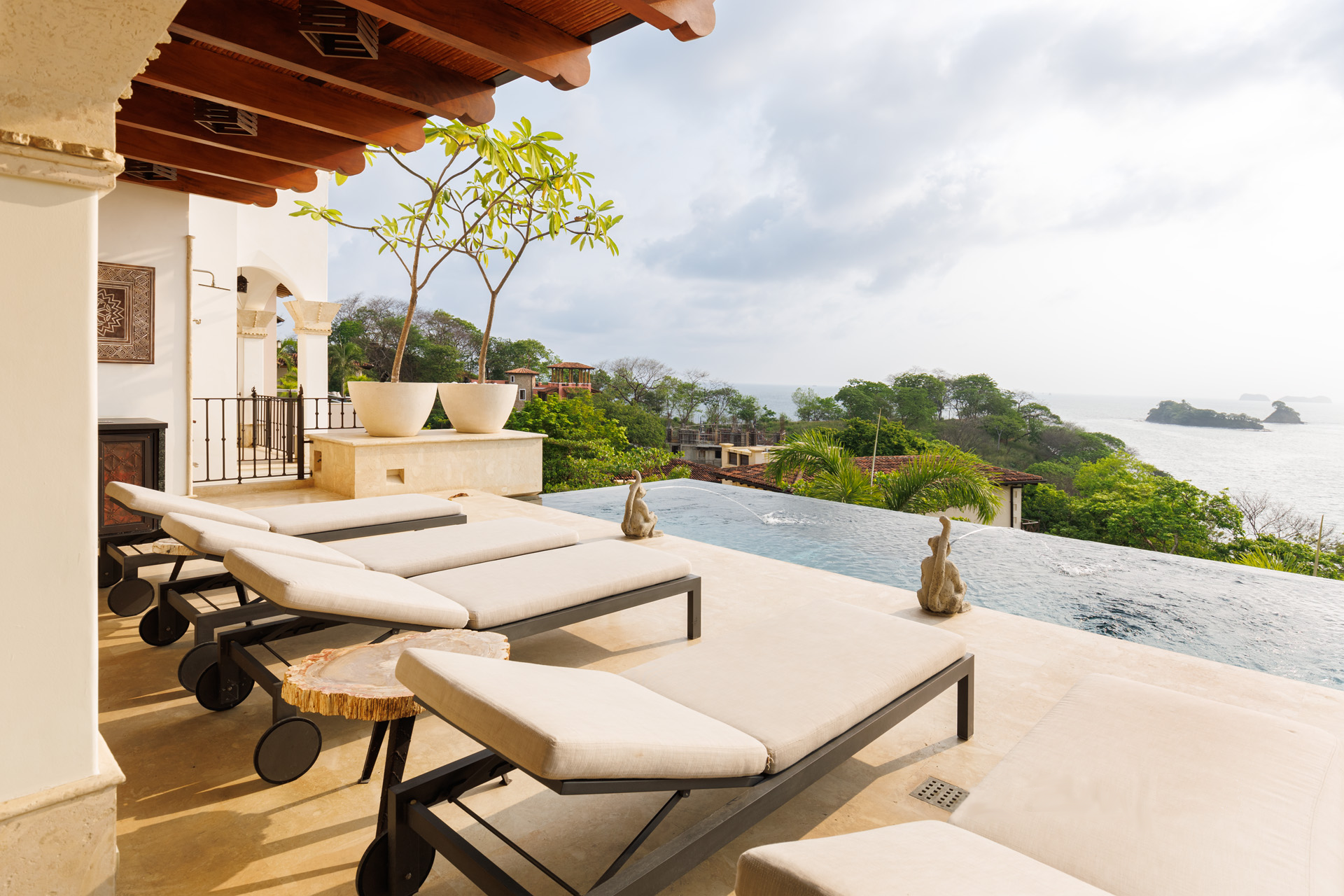
For large groups choosing Guanacaste as their base, Villa Alberti in Las Catalinas is built specifically for that use case. Seven suites sleep up to 21 guests in beds, including a dedicated children's suite. The property is fully staffed, with west-facing sunset views from nearly every room, two pools, a rooftop lounge, and walkable access to beaches, dining, and town activity.
Las Catalinas' car-free layout removes vehicle coordination from daily life , a meaningful advantage for multigenerational groups and large parties where logistics multiply quickly.
FAQs
Is Guanacaste or Manuel Antonio better for families?
Guanacaste is generally the more practical choice for families with young children or multigenerational groups. Calm beaches, dry season reliability, short airport transfers, and walkable beach towns reduce daily logistics. Manuel Antonio suits active families whose primary goal is wildlife and national park access.
Which region has better beaches , Guanacaste or Manuel Antonio?
Both have excellent beaches, but they suit different preferences. Guanacaste's beaches are quieter, more accessible, and better for calm swimming and water sports. Manuel Antonio's park beaches are iconic but busier and require park access.
Is Manuel Antonio worth visiting if you have already been to Guanacaste?
Yes. The two regions offer genuinely different experiences. If a previous Guanacaste trip focused on beach and villa time, Manuel Antonio adds rainforest, wildlife, and national park access that Guanacaste cannot replicate.
Which part of Costa Rica is easier to get to from the United States?
Guanacaste. Liberia International Airport receives direct flights from most major U.S. hubs, with short transfers to beach destinations. Manuel Antonio typically requires flying into San José and a three-plus hour drive.
Can you visit both Guanacaste and Manuel Antonio on the same trip?
Yes, though the drive between them takes approximately five to six hours. For trips of 10 days or more, splitting time between regions is practical. For a week-long trip, most travelers choose one base and take day trips rather than relocating mid-trip.
